



05 Feb How Modular Architectural Interiors Adapt to Changing Business Needs
In today’s rapidly shifting business landscape, the physical spaces organizations occupy are no longer static backdrops to daily operations; they’re strategic assets. Offices, retail environments, hospitality venues, and collaborative spaces must adapt quickly to evolving work patterns, technology requirements, and organizational growth. Static interiors with fixed walls, traditional power layouts, and rigid furniture simply can’t keep pace. That’s where modular architectural interiors step in, offering adaptable, scalable, and future-ready environments that flex with your business.
Why Flexibility Matters Now More Than Ever
The traditional office model, rows of fixed cubicles and unchangeable meeting rooms, is being replaced by dynamic workspaces that support hybrid work schedules, project-based teams, and diverse work styles. Organizations today face:
- Changing team sizes and structures
- The rise of hybrid and flexible work models
- Ongoing technological transformation
- The need to balance collaboration and privacy
Rigid interiors require costly renovations and downtime whenever a new need arises. Companies are increasingly seeking smart, adaptable systems that empower them to quickly reconfigure space without major construction, saving both time and money. This shift is fundamental to modern design and a core principle behind modular architectural solutions.
Modular Walls: Redefining Space on Demand
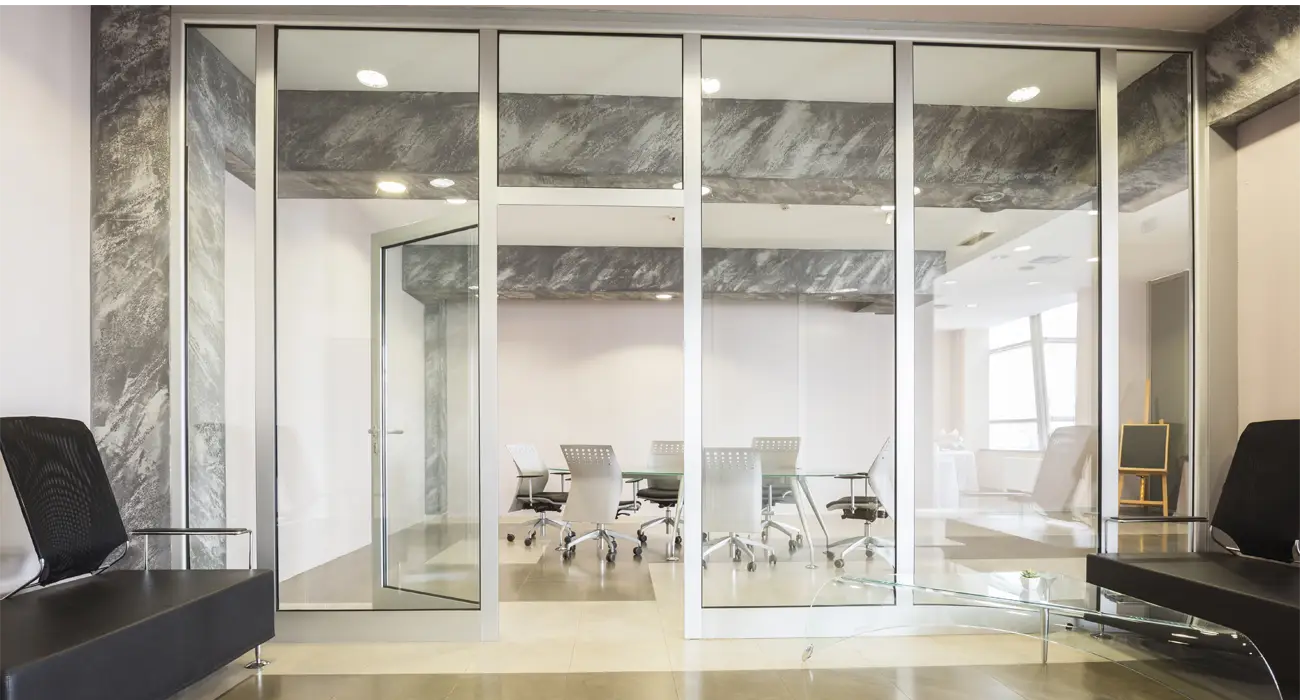
One of the most impactful elements of adaptable interiors is the modular wall system. Unlike fixed drywall or permanent partitions, modular walls can be added, removed, or repositioned with minimal disruption. They allow businesses to:
- Expand or shrink rooms based on activity (e.g., large team meetings vs. focused work).
- Divide open space into private offices or collaboration zones.
- Create temporary areas for events, training sessions, or client presentations.
Modular walls support rapid transformation of space without demolition or lengthy renovations, a clear advantage in agile work environments where requirements can change from quarter to quarter. They help organizations maximize square footage and tailor their environment to shifting priorities, whether that’s more privacy or more openness.
Raised Access Flooring and Power Distribution: Infrastructure That Moves With You
While walls define and divide space, the often-overlooked backbone of flexible interiors is the power and data distribution system, especially when integrated with raised access flooring. Traditional construction embeds electrical and data conduits into fixed walls and ceilings, making changes costly and disruptive. In contrast:
- Raised access flooring provides businesses with a grid beneath the surface that houses power, data, and communication connections.
- Modular power distribution systems make it possible to relocate outlets and data hubs wherever workstations and collaborative zones move.
This flexible infrastructure empowers teams to rearrange work environments, from open-plan desks to private pods, without costly rewiring or construction. It’s a critical enabler of modern workflows driven by technology and collaboration.
Modular Furniture: Form Follows Function
Furniture is perhaps the most visible and tactile element of interior space, and when it’s modular, it becomes a dynamic tool for change rather than a static design choice. Modular furniture systems include desks, chairs, lounge seating, and storage that can be reconfigured, expanded, or reduced as needs evolve. The benefits include:
- Adaptability: Pieces can be rearranged to support individual work, team collaboration, or presentations.
- Scalability: As teams grow or shrink, furniture can be added, removed, or repurposed.
- Mobility: Lightweight, modular components allow for quick updates without specialized tools.
Beyond physical adaptability, modular furniture fosters a culture of flexibility, encouraging workers to choose spaces that best support their tasks and enhancing comfort and productivity.
Future-Proofing Workspaces
Modular interiors are not just about solving today’s challenges; they’re about anticipating tomorrow’s. Businesses face uncertainty: organizational changes, technology upgrades, cyclical market demands, and workforce shifts. Future-ready environments are designed to evolve, not age out. A modular design strategy:
- Reduces long-term operating costs by minimizing renovation needs
- Supports sustainability by enabling reuse and reducing waste
- Improves employee satisfaction through comfortable, adaptable environments
Choosing modular systems, from walls and flooring to power and furniture, allows companies to pivot with agility, aligning their physical spaces with evolving strategic goals rather than being constrained by them.
Practical Applications in Today’s Business Landscape
Hybrid Offices – With hybrid work now commonplace, offices need to support both in-person collaboration and individual focus. Movable walls allow for larger open areas one day and smaller enclosed spaces the next. Modular furniture can be reconfigured to suit team meetings, brainstorming sessions, or quiet work.
Retail and Hospitality – Retail spaces benefit from modular design, allowing them to adapt floor plans for seasonal displays, pop-up events, or experiential zones. Hospitality environments can reconfigure lobby layouts or dining areas depending on guest traffic and event schedules.
Multipurpose Venues – Workshops, training centers, and conference facilities often need flexible room sizes and layouts. Modular walls and movable furniture offer the versatility to host small groups or large audiences with ease.
Embracing Change With Intentional Design
Modular architectural interiors represent a strategic shift from static to dynamic design, aligning space with the realities of modern business. Whether through flexible walls that redefine boundaries, power and data systems that support fluid layouts, or furniture that adapts as easily as your team’s needs, modular design provides the tools businesses need to thrive in a constantly changing world.By investing in modular solutions, organizations not only enhance functionality but also future-proof their environments, making flexibility a built-in capability rather than an afterthought. In the end, spaces should serve the people who use them, and modular interiors make that possible.