



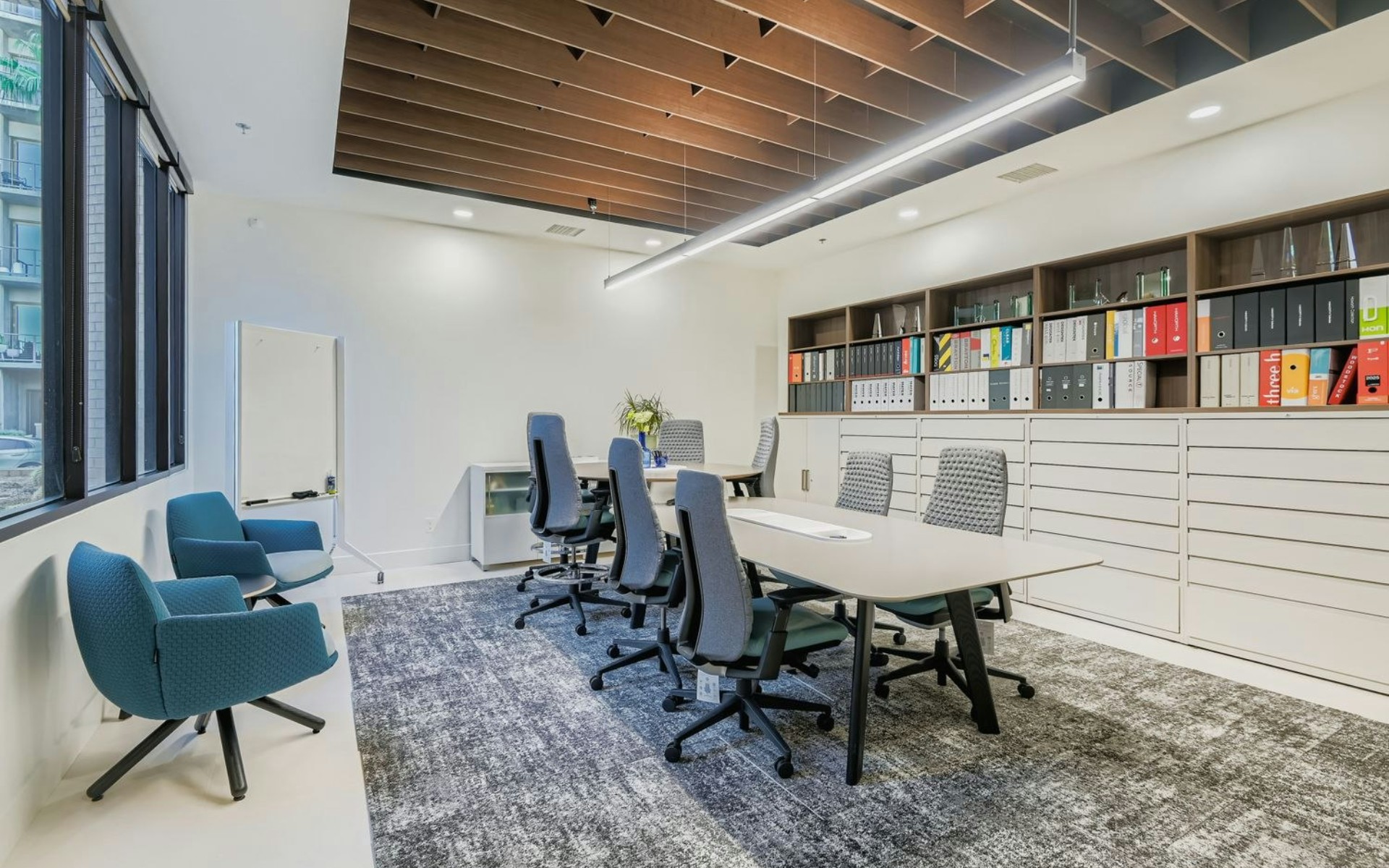
05 Feb Case Studies in Floor-to-Ceiling Workspace Transformations
When organizations rethink their work environments, the most successful transformations don’t happen in isolation. Walls alone don’t solve workflow challenges. Furniture without infrastructure limits flexibility. Power and technology without a spatial strategy create inefficiencies.True workplace transformation happens when interiors are designed from the floor to the ceiling, with architectural systems, infrastructure, and furniture working together as a single, cohesive solution. The following case studies highlight how unified interior strategies deliver measurable value, helping organizations move faster, work smarter, and adapt with confidence.
Why a Unified Interior Solution Matters
Fragmented interior projects often result in misalignment: power doesn’t land where furniture ends up, walls restrict future change, and spaces require costly rework within a few years. A unified approach eliminates those disconnects by coordinating:
- Raised access flooring and infrastructure
- Modular walls and architectural elements
- Commercial furniture and layout strategy
The result is a workspace that functions better on day one, and continues to evolve as business needs change.
Case Study 1: Corporate Office Reimagined for Hybrid Work
The Challenge: A growing professional services firm needed to modernize its headquarters to support hybrid work. The existing space was built around fixed offices and hardwired infrastructure, making it difficult to balance collaboration, privacy, and flexibility. Leadership wanted a solution that could evolve without repeated renovations.
The Floor-to-Ceiling Solution: The transformation began with raised access flooring to house power, data, and HVAC distribution. Modular wall systems replaced permanent construction, allowing offices and meeting rooms to be resized or relocated as needed. Commercial furniture systems were selected for adaptability, supporting both individual focus and team collaboration.
What the Client Gained:
- Flexible layouts that adapt to changing occupancy
- Faster reconfiguration without construction downtime
- Improved employee experience through choice and comfort
By integrating infrastructure, architecture, and furniture, the workspace became a dynamic tool that supports hybrid work today while remaining ready for future change.
Case Study 2: Rapid Deployment for a Growing Technology Team
The Challenge: A technology company needed to deploy a new regional office on an aggressive timeline to support rapid hiring. Traditional build-out schedules posed a risk to onboarding plans and operational readiness.
The Floor-to-Ceiling Solution: A turn-key, unified interior solution was deployed, combining modular flooring, integrated power distribution, demountable walls, and ready-to-use furniture systems. Because all elements were designed to work together, installation was streamlined and predictable.
What the Client Gained:
- Accelerated move-in timeline
- Reduced coordination between vendors
- A space ready for immediate productivity
Just as importantly, the modular systems allow the office to scale up or shift layouts without disrupting operations as the team continues to grow.
Case Study 3: Training and Collaboration Space Built for Versatility
The Challenge: An organization operating a multipurpose training and collaboration facility needed rooms that could flexibly accommodate workshops, presentations, and small-group sessions. Fixed walls and traditional layouts limited how the space could be used.
The Floor-to-Ceiling Solution: Movable wall systems were combined with raised access flooring and flexible furniture to create a highly adaptable environment. Power and data access points were distributed throughout the floor, allowing layouts to change without technical constraints.
What the Client Gained:
- Multiple room configurations within the same footprint
- Faster transitions between event types
- Better utilization of square footage
The unified interior strategy transformed the space into a high-performing asset rather than a single-purpose facility.
Case Study 4: Office Renovation Without Operational Disruption
The Challenge: A corporate client needed to renovate an occupied office while minimizing disruption to daily operations. Traditional construction would have required phased shutdowns and extended timelines.
The Floor-to-Ceiling Solution: Modular architectural systems were installed alongside raised access flooring, allowing work to be completed in stages with minimal noise and downtime. Furniture systems were swapped and reconfigured without rewiring or demolition.
What the Client Gained:
- Minimal disruption to employees
- Faster renovation timeline
- A future-ready space without repeated construction
Because the interior systems were modular and integrated, future updates can be handled just as seamlessly.
The Common Thread: Outcomes Over Components
While each project had different goals, the outcomes were consistent:
- Speed: Faster delivery and quicker occupancy
- Flexibility: Spaces designed to evolve, not expire
- Efficiency: Reduced rework, waste, and long-term costs
- Experience: Environments that support how people actually work
These results aren’t driven by any single product—they’re achieved through a floor-to-ceiling mindset that treats the workspace as an interconnected system.
Designing for What Comes Next
The most valuable workspace transformations don’t just solve immediate problems—they prepare organizations for what’s next. Whether adapting to hybrid work, scaling teams, or embracing new technology, unified interior solutions provide the flexibility needed to respond without starting over.By aligning flooring, infrastructure, walls, and furniture into one coordinated strategy, organizations gain spaces that support productivity today and resilience tomorrow.
From Projects to Platforms
Floor-to-ceiling workspace transformations shift interiors from one-time projects to long-term platforms for growth. When every element works together, the workspace becomes more than a physical environment—it becomes a strategic advantage.Unified interior solutions don’t just change how a space looks; they transform it. They change how it performs, how it adapts, and how effectively it supports the people inside it.